Why Is Fashion Still Catching Up to Miguel Adrover?

Miguel Adrover’s Instagram profile post: “caperuchitaloba”
by Valeria Cemu
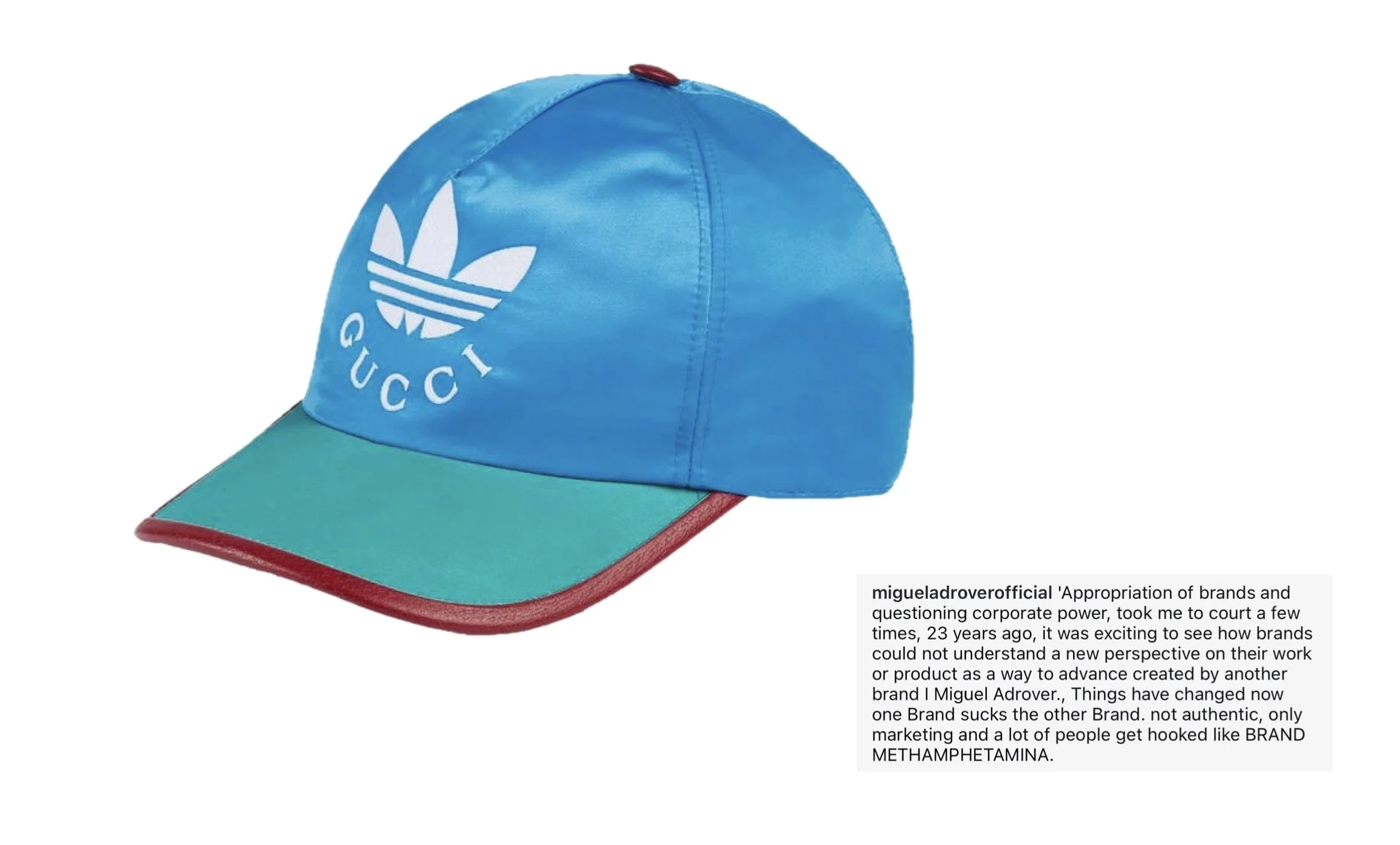
Since 2021, the alliance known as The Hacker Project between Balenciaga and Gucci has challenged traditional luxury codes, questioning authorship, imitation, and brand identity. This year, a new collaboration reignited the conversation: Adidas x Gucci, merging luxury and streetwear and reaffirming that issues such as branding, appropriation, and counterfeiting are no longer peripheral trends but central topics within contemporary fashion discourse.
Yet long before Demna Gvasalia or Alessandro Michele, there was Miguel Adrover.
Who is Miguel Adrover?
For those born in the 1990s or after the 2000s, his name may sound unfamiliar. A self- taught designer born in Mallorca in 1965, Adrover is considered one of the most influential and disruptive figures of early 2000s fashion, alongside Alexander McQueen and Martin Margiela, for his ability to dismantle the industry’s established norms.
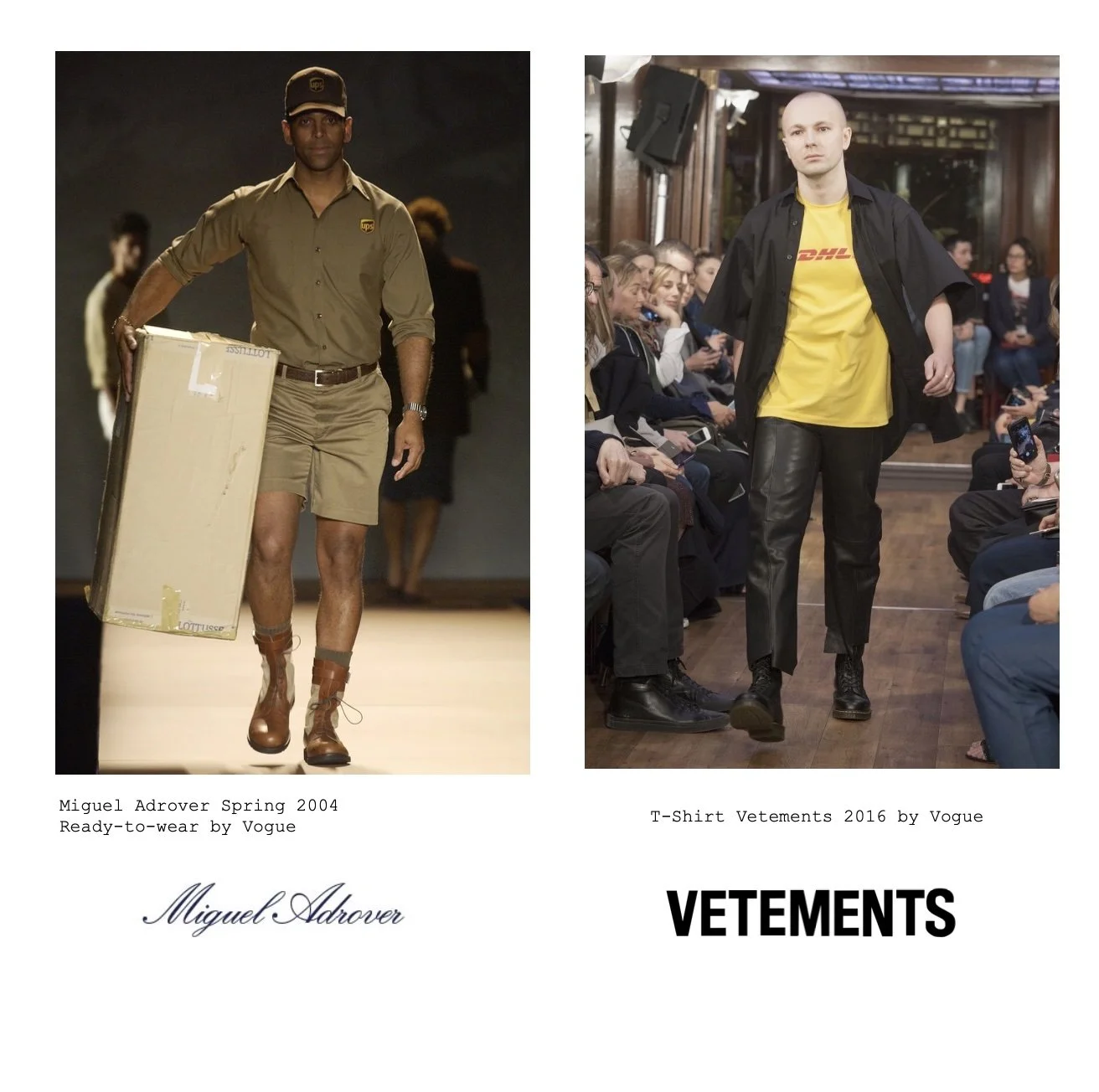
Adrover belonged to a generation that sought to balance the commercial demands of fashion with a deeply critical creative vision. His work openly addressed capitalist culture and the power of imagery as a driving force of desire and consumption, anticipating what we now describe as logomania.
Long before sustainability became a buzzword, garment recycling was a constant in his collections.
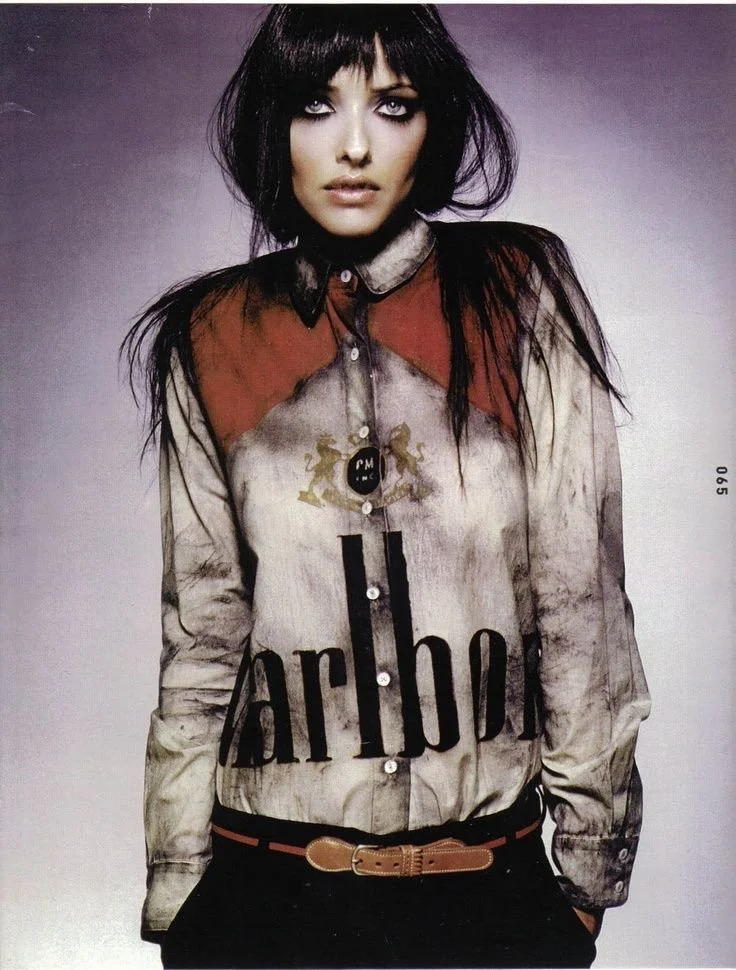
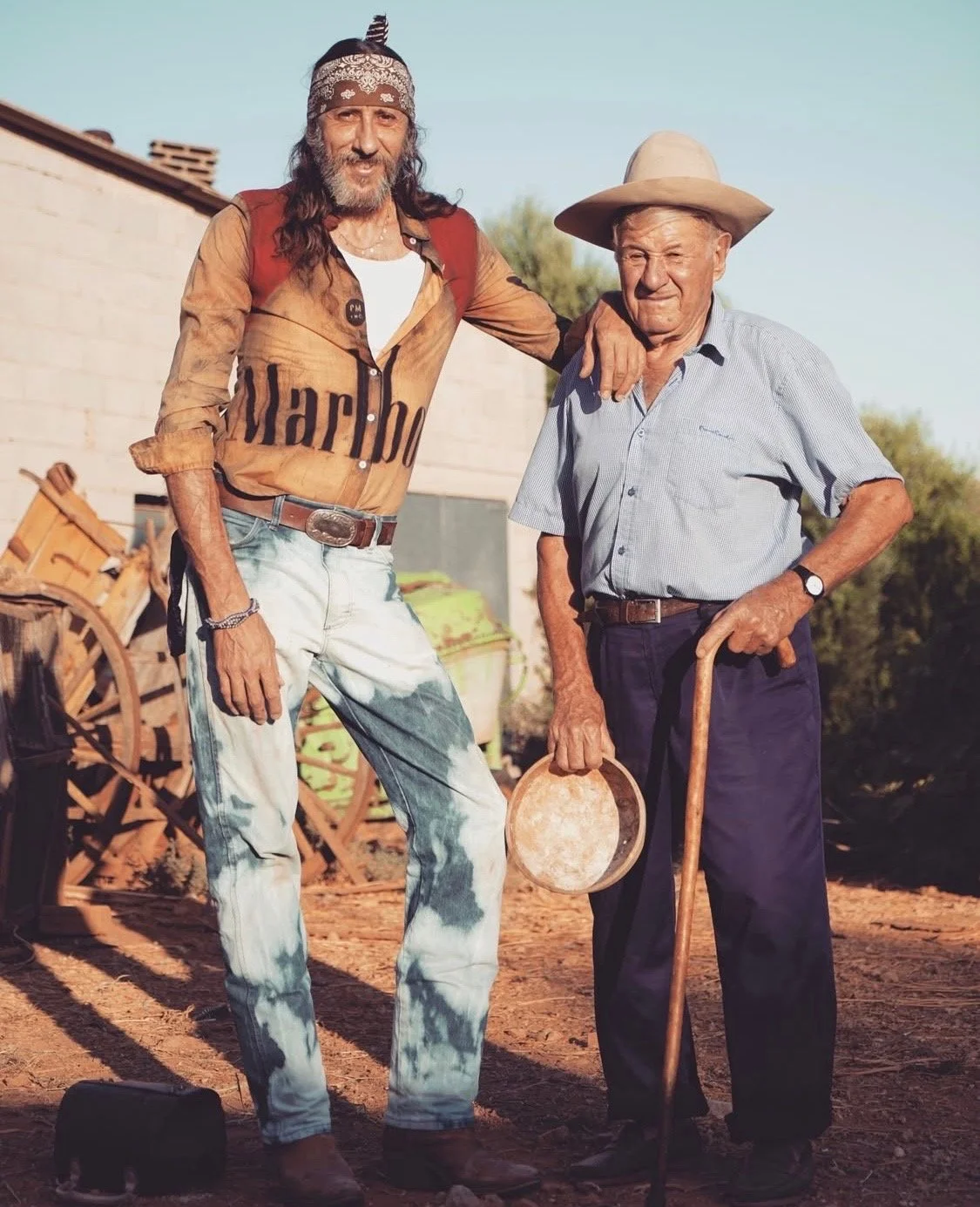
Miguel Adrover's Marlboro Shirt Miguel Adrover via IG
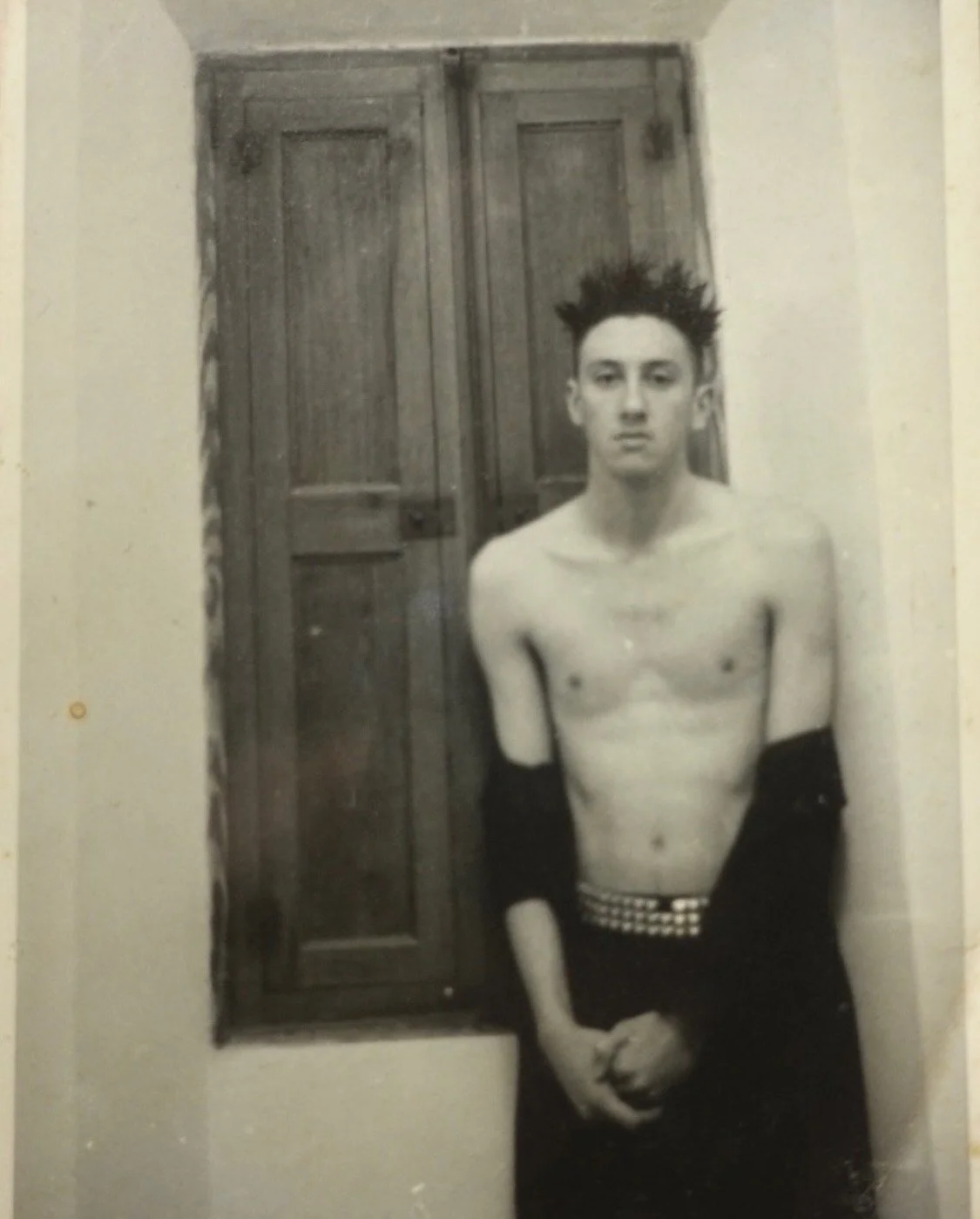
His first encounter with fashion occurred at the age of thirteen during a trip to London, where music and subcultures punk, post-punk, and the New Romantics, shaped his aesthetic sensibility.
In the early 1990s, he moved to New York and worked within the textile industry.
His access to fabric warehouses, factories, and suppliers allowed him to develop his first collections out of necessity, a concept he has often cited as the foundation of his creativity.
That same necessity led him to open his first store in the East Village, Horn.
More than a retail space, it became a cultural platform where young creative energies from across the world converged.
He stocked emerging labels such as Bless and AsFour, which at the time lacked representation and exposure.
Miguel Adrover (1980)
During this period, Adrover formed a close relationship with Alexander McQueen. He collaborated with him through research and consultancy, sourcing materials such as bones and horns from various shops across New York. In London, Adrover spent weeks sleeping on the studio floor, working alongside McQueen’s team to develop new collections.
McQueen often compensated him by gifting pieces that Adrover later sold at Horn.
It was a space where fashion was explored conceptually and radically, unlike anywhere else.
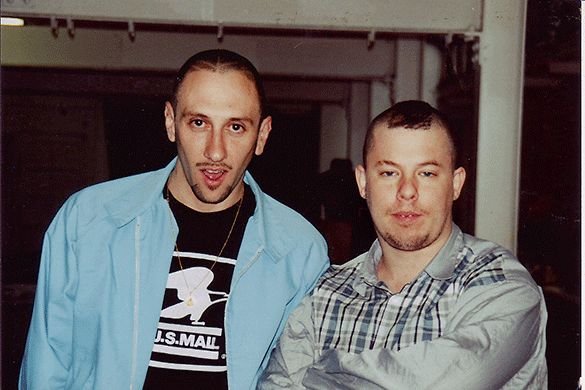
Miguel Adrover and Lee Alexander McQueen by Juergen Teller (1990s)
Amid growing global concern over the rise of the Taliban, Adrover presented a Middle East-inspired collection that, as critic Cathy Horyn noted, appeared at the worst possible moment. His collection, Utopia became his downfall: it was shown just 48 hours before the collapse of the Twin Towers. The ethnic references were accused of romanticizing Taliban culture and even triggered a CIA investigation.

In a later interview, Adrover stated:
“It caused me more trouble in the Western world than in the Eastern one. It was more about the
Islamophobia generated in the United States than actual attacks from radical Islamists. When I created a collection using Jewish symbols, I received numerous death threats from Orthodox Jews in Brooklyn, yet never faced attacks from Muslim radicals.”
Miguel Adrover Fall 2001 Ready-to- wear fashion show by Vogue
The consequences were severe. His sponsors, Pegasus, declared bankruptcy, forcing Adrover to cancel retail orders and temporarily withdraw from the industry.
After a year-long hiatus, he resurfaced in 2004 without financial backing.